

Location Rheinalle, Grenzach-Wyhlen, on the outskirts of Basel
Site 42,000 square metres
Brief To design an international architecture school for final year architecture students. The school should cater to approximately 200 students.
Program
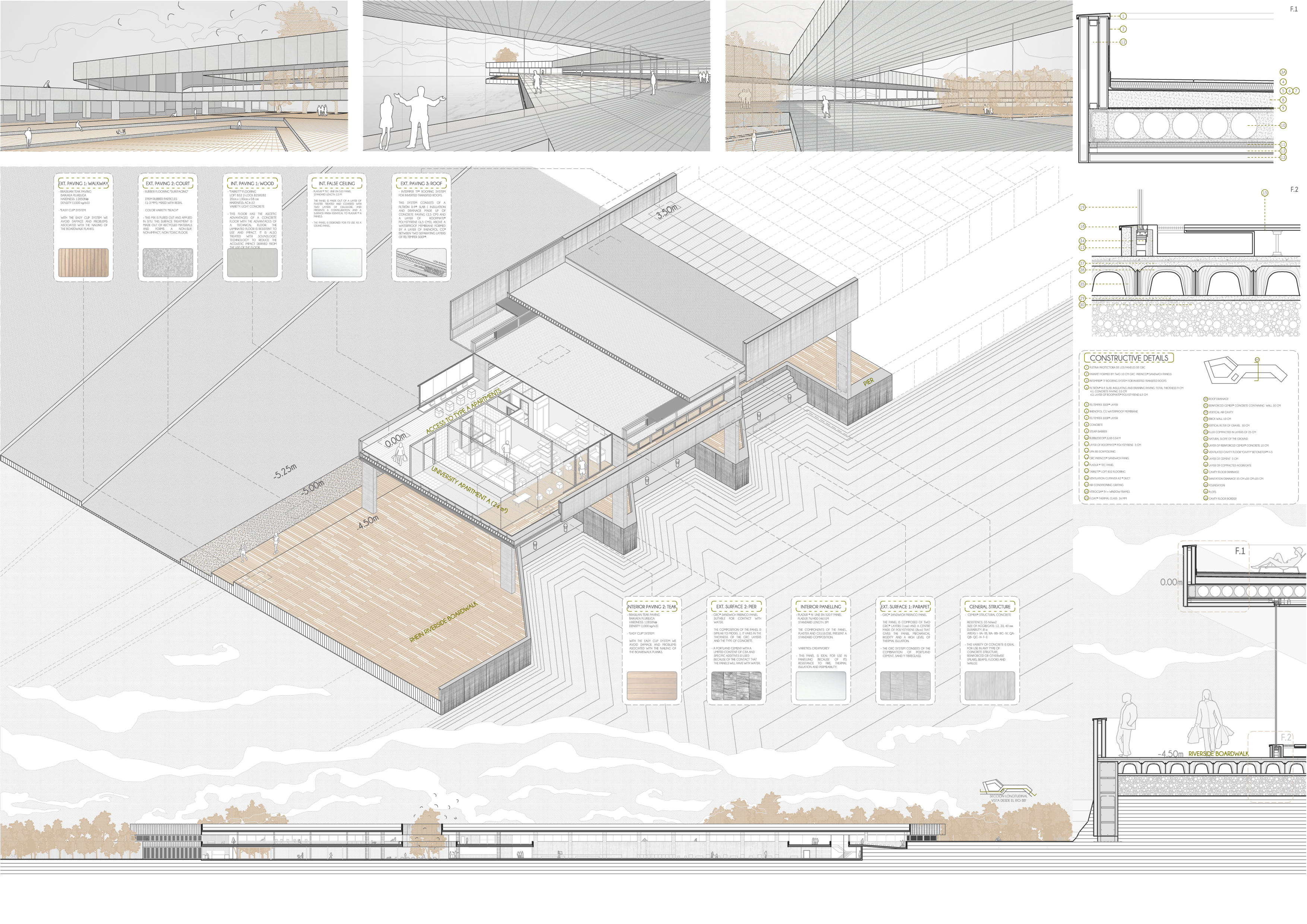
- Halls of residence: 3,000 square metres. Each apartment should be no larger than 30 square metres.
- Educational facilities: 5,300 square metres . I have designed a integrated system of classrooms, workrooms, documentation and exhibition spaces, as well as a campus auditorium that seats 250 people.
- Offices: 1,000 square metres. Administration and management offices and school department offices.
- Complementary service spaces : Reception, cafeteria, computer and printing facilities and installations.
Background The project site is in the municipality of Grenzach-Wyhlen, stretching 500m along the northern side of the Rhein with a 6m to 9m drop from the road to the river shore. The surrounding area is quiet and suburban, combining low intensity industry, private residences and agriculture. The character of the opposite shore is markedly more industrial . The site is 7km east of Basel, but with regular train services and a bicycle path along the Rhein, access to the location from Basel is easy. This makes it possible for students to either live on campus or in the city. Basel is an important city, commercially and economically because of its location on the banks of the Rhein and on the border of three nations: Germany, Switzerland and France. The international significance of the city is an asset to the project and to the purpose of developing an international centre of architecture design.
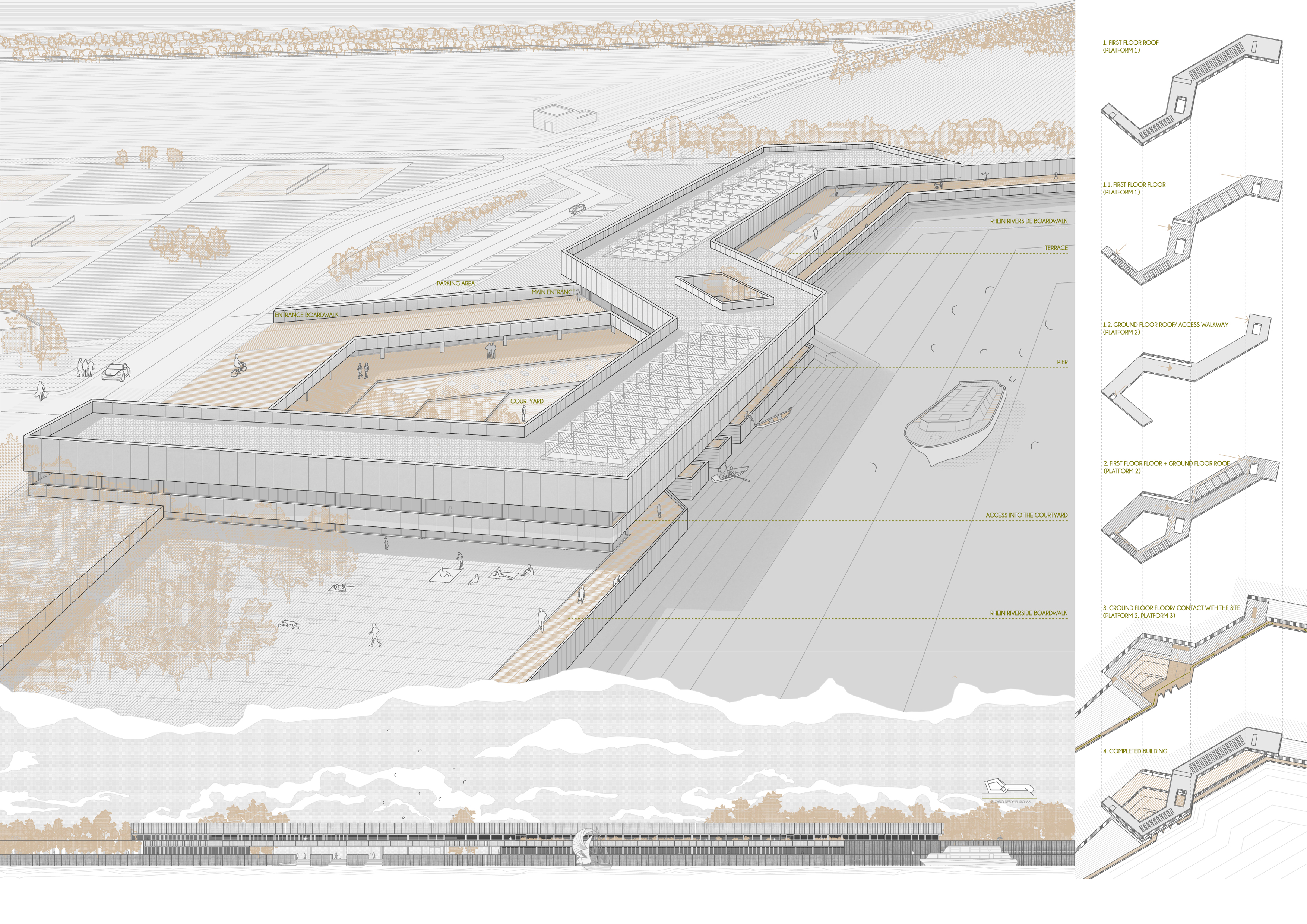
Personal Intention I propose to fulfil the remit of the brief with a building formed by two platforms that run along the Rhein reworking the line of the river. Given the influence that the river has in the area, the building was designed to adapt itself to the existing topography and surroundings. The goal was to achieve a design that looked like it could have developed naturally. To that end, many factors were taken into consideration, such as the difference in altitude from the road to the river, the shape, size and extension of the site and the presence of the river.
The main entrance is the point of union of the two wings of the building. The two wings of the building are marked but not separated. Through this language of platforms that move and shift, the building can maintain the differences of the two spaces without isolating them. On one side, we have the wing associated with the courtyard. The platforms branch out to surround this area, opening and closing the space, permitting access through the walkway and through the pier and boardwalk. The quieter and more private spaces of the campus are found in this wing (halls of residence, cafeteria, library and study areas). On the other side we have the wing of the building that plays with the longitudinal qualities of the platforms. In this wing, the platforms start to shift apart or together to create a combination of volumes and voids. The lower platform turns into the terrace for the higher platform but without losing their interior connection. The more public functions of the university are housed in this wing (administration, departments, classrooms, work rooms and the auditorium).
 Carmen Domenech Bunce